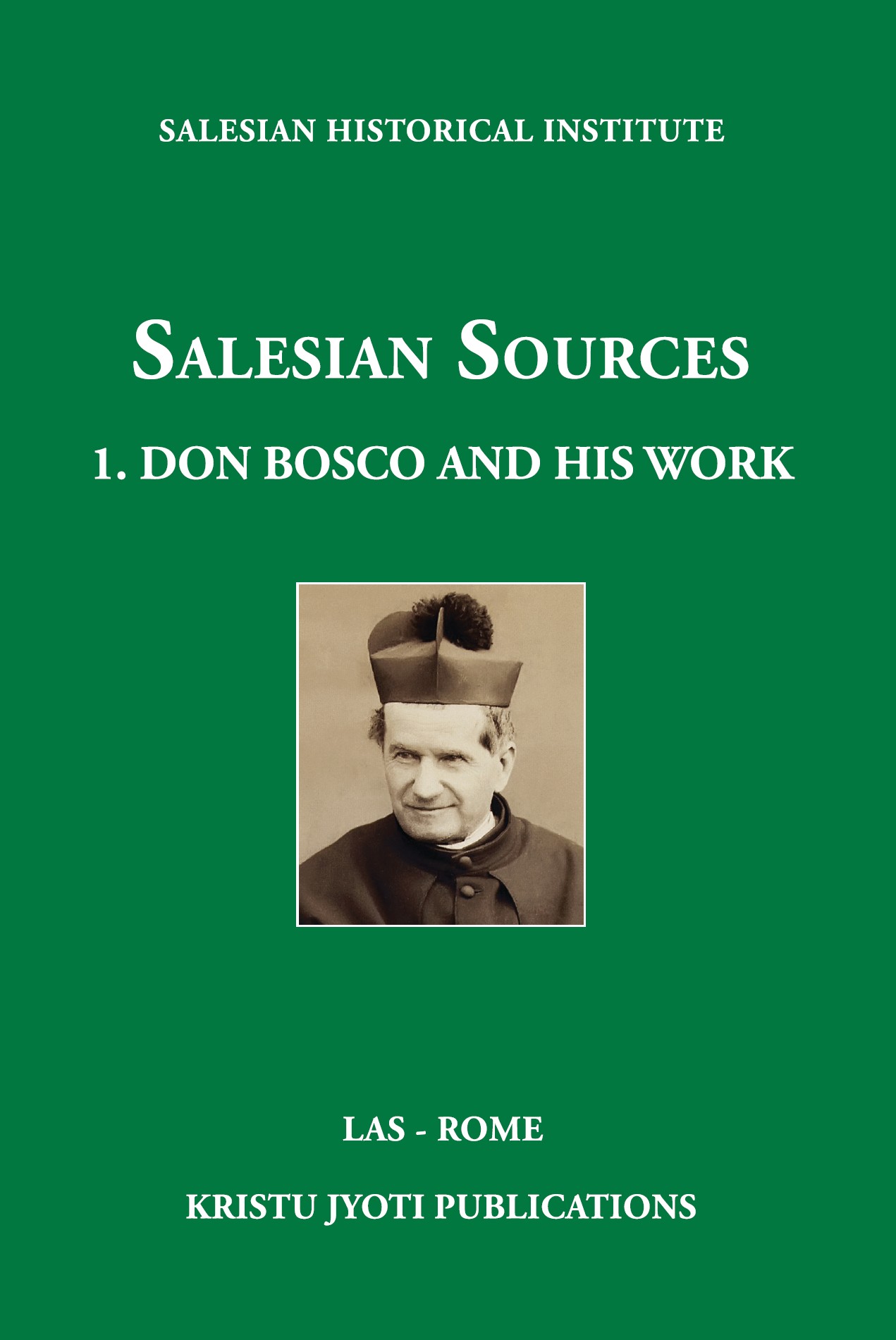
Giovanni Bosco – Interventions to solve the matter of Bishops’ ‘Temporalities’ (1872-1874)

The Law of Guarantees on 13 May 1871 and decrees applying to this required that for newly appointed bishops to enter into possession – the so-called temporalities – they had to present the Minister with the original decree of appointment and formally ask for the exequatur to be granted. This act, in the Holy See’s judgement, implied recognising the Kingdom of Italy which came into being in 1861, and included part of the Papal States ‘illegally’ taken from the Pontiff.

Continue reading “Giovanni Bosco – Interventions to solve the matter of Bishops’ ‘Temporalities’ (1872-1874)”

Giovanni Bosco – The Institute of the Daughters of Mary Help of christians

In the early 1870s, when the Salesian Society was going through a happy time of expansion beyond the borders of Piedmont, thanks also to the many vocations flowing in, Don Bosco, with a group of Daughters of Mary Immaculate at Mornese who were gathered around Mary Domenica Mazzarello (1837-1881), gave life to the Institute of the Daughters of Mary Help of Christians. In a very short time it was approved by the Diocesan Ordinary and aggregated to the Salesian society, then spread throughout Italy and overseas. We publish here five documents on this women’s foundation.

Continue reading “Giovanni Bosco – The Institute of the Daughters of Mary Help of christians”

Giovanni Bosco – Confidential letters to the Pope concerning the political situation (1858-1867, 1873)

In the years immediately preceding and following Italian Unity (1858-1866), Don Bosco kept constantly in touch with Pius IX by letter. He did this not only for interests directly relating to his work, but also in reference to the worrying situation the Church was going through in Piedmont, to encourage him in his defence of the faith against the enemies of religion, and to pass on to him any likely reserved information in his possession. As already indicated, Don Bosco was with Pius IX and his Secretary of State, Card. Antonelli, on the Roman question. Slowly however, he became convinced that a too vigorous resistance to the “revolution” was becoming ever more pointless, even risked worsening the situation, so after the capture of Rome he chose, also politically, the principle of doing whatever good could be done.

Continue reading “Giovanni Bosco – Confidential letters to the Pope concerning the political situation (1858-1867, 1873)”

Giovanni Bosco – Beginning, extension and charismatic and institutional consolidation of the work at Valdocco

Don Bosco, at the advice of his spiritual director, St Joseph Cafasso from autumn 1844 to summer 1846 lived at the Barolo Refuge as chaplain of the Little Hospital of St Philomena, opened in August 1845. In the same place and in other temporary places not far from Valdocco, he carried out his early priestly ministry on behalf of boys, mostly immigrant lads who had no parish of reference. On the vigil of his move to the Pinardi house, he drew up for the civil authorities of the city of Turin, who were responsible for and concerned about public order, a very brief account of his three years of catechetical activity, indicating the aims and results he had achieved that were positive both for civil society and the Church (no. 1).

Continue reading “Giovanni Bosco – Beginning, extension and charismatic and institutional consolidation of the work at Valdocco”

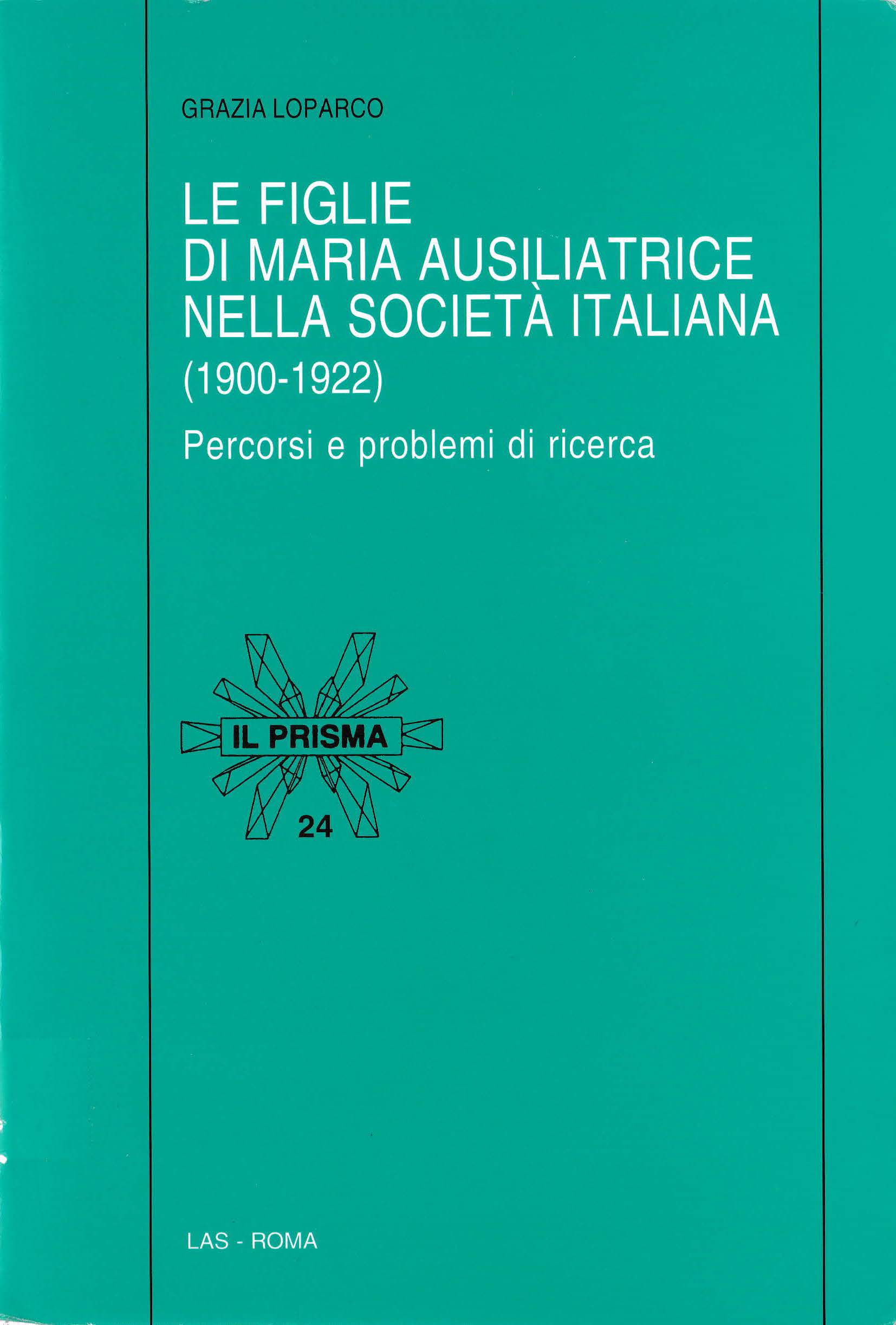
Grazia Loparco – Le Figlie di Maria Ausiliatrice nella società italiana (1900-1922). Percorsi e problemi di ricerca

Queste pagine, ravvivate dal­la non rara citazione di autori dei primi del Novecento, come Turati, Treves, e del­la rivista Critica sociale, di storici ben noti, come Jemolo e Menozzi, dal­la conoscenza di studi anche “laici”, ci presentano queste Figlie di Maria Ausiliatrice nel loro insieme: attive, coraggiose, vivaci, fedeli al proprio carisma salesiano, e insie­me sensibili al­le esigenze del momento. I terribili ispettori governativi del Ministero del­la Pubblica Istruzione (nel­le scuole), e del Ministero degli Interni (nei convitti per operaie) lentamente superano la loro diffidenza, anche se parlano ancora di suore “furbe”. Quei liberali e quei socialisti sbagliavano. Non si trattava di furbizia, ma di adattamento ai tempi, di autentica ansia apostolica, che negli ospedali militari evitava qualunque pressione per la frequenza ai sacramenti, e si limitava a cenni accetti ed efficaci, e nel­le scuole, negli oratori, nei convitti mostrava un sincero amor patrio, ma unito sempre al­la piena fedeltà al papa, evitava troppe devozioni, ed insisteva sul­l’essenziale, correttezza, sacrificio, letture sane, confessione e comunione. Le Figlie di Maria Ausiliatrice non erano furbe nel senso deteriore, e forse non mancava in esse ogni tanto una certa ingenuità. Certo non erano per nul­la politicanti, erano solo fe­deli al­la classica massima di don Bosco: “Dammi le anime, prendi il resto”.

Periodo di riferimento: 1900 – 1922

Loparco Grazia, Le Figlie di Maria Ausiliatrice nella società italiana (1900-1922). Percorsi e problemi di ricerca, Roma, LAS 2000.

Istituzione di riferimento:
Pontificia Facoltà di Scienze dell’Educazione “Auxilium”

Pontificia Facoltà di Scienze dell'Educazione

Michael Ribotta – The “Big Rat” and the “Mad Priest of Turin”- Don Bosco’s relationship with Prime Minister Rattazzi

Perhaps of all the leading political personages of the Italian Risorgimento with whom Don Bosco enjoyed some measure of friendship, Urbano Rattazzi’s name, like Abou Ben Adam’s, led the rest.

Continue reading “Michael Ribotta – The “Big Rat” and the “Mad Priest of Turin”- Don Bosco’s relationship with Prime Minister Rattazzi”

Pietro Stella – Per una storia del profetismo apocalittico cattolico ottocentesco. Messaggi profetici di don Bosco a Pio IX e all’imperatore d’Austria (1870-1873)

D. Bosco, per certi atteggiamenti, è come tutti coloro che interpretano come male, come eticamente riprovevole, socialmente e pedagogicamente infecondo quanto avvertono prescindere dalla religione o quanto trovano dichiaratamente avverso alla Religione Cattolica, vista nel suo aspetto storico di società gerarchicamente costituita e con prerogative di valore socio-politico. Fatti luttuosi nei quali incorrono Pio IX, l’arcivescovo Fransoni, da lui vengono interpretati come prove di Dio o come insidia diabolica permessa per purificare e fortificare i buoni. Lutti invece che toccano Vittorio Emanuele II o altri che appaiono persecutori della Chiesa o conniventi con le forze avverse, vengono giudicati come tremendi castighi di Dio. Continue reading “Pietro Stella – Per una storia del profetismo apocalittico cattolico ottocentesco. Messaggi profetici di don Bosco a Pio IX e all’imperatore d’Austria (1870-1873)”

Michael Ribotta – “School days … golden rule days” … John Bosco’s public school years

The road traveled by John Bosco, as child and teenager, in his quest for an education, proved to be a bumpy one, marked by frequent twists and turns and occasionally stalled by unforeseen roadblocks. But despite occasional disheartening setbacks, John’s high hopes in his pursuit of an education would prevail over disconcerting frustrations.

Continue reading “Michael Ribotta – “School days … golden rule days” … John Bosco’s public school years”

Arthur Lenti – Don Bosco’s love affair with “poor and abandoned” young people and the beginnings of the oratory

The present study aims, not at any new interpretation, but simply at describing some aspects of the actual circumstances of the origins on the basis of fresh documentation now available. In particular, restricting the field of inquiry, I will focus on the young people who were protagonists in Don Bosco’s work at its origin.

Continue reading “Arthur Lenti – Don Bosco’s love affair with “poor and abandoned” young people and the beginnings of the oratory”

Proudly powered by WordPress | Theme: Baskerville 2 by Anders Noren.

Up ↑