Il volume presenta gli Atti del Convegno mariano internazionale, svoltosi a Roma dal 27 al 30 dicembre 2004 sul tema: “Io ti darò la Maestra …”. Il coraggio di educare alla scuola di Maria.
Il volume presenta gli Atti del Convegno mariano internazionale, svoltosi a Roma dal 27 al 30 dicembre 2004 sul tema: “Io ti darò la Maestra …”. Il coraggio di educare alla scuola di Maria.
In Don Bosco’s educational system preaching has special importance, both that which is bound up with the liturgical or catechetical context, and that of the informal, familiar kind. The saint often addressed the community of young people with brief and fervent talks aimed at stirring up their emotions, nurturing their minds, encouraging good resolutions and devout sentiments, and looking ahead to stimulating horizons.
La ricchezza di questa storia non sta in una semplice visione d’insieme, ma nelle pieghe che esse svela, nelle sue luci e nelle sue ombre, descrivendo i passaggi da un periodo all’altro, la fisionomia delle persone coinvolte nell’avventura, l’adattamento ai tempi.
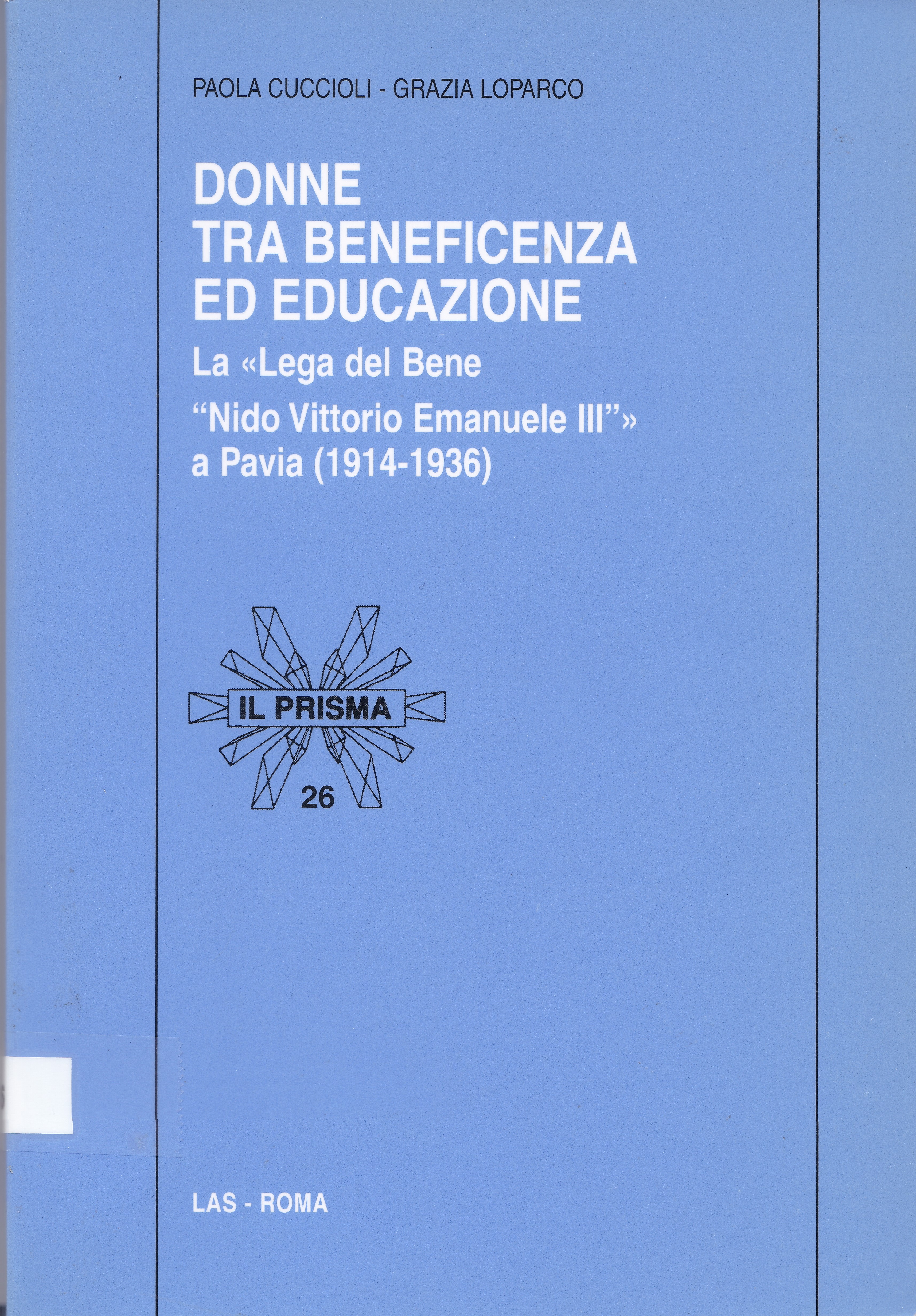
Si coglie così, con piacere, che la “Lega del Bene” è una fondazione assistenziale prettamente femminile, voluta dalla Martinetti e sostenuta inizialmente soprattutto da altre donne benestanti di Pavia; che la Martinetti aveva cercato di aiutare i minorenni non solo sotto l’aspetto pratico, cioè con la sua fondazione, ma aveva anche tentato di promuovere una riflessione sulle loro difficoltà, per poter arrivare a migliorare gli interventi in loro favore; che il fascismo ha influito sulla struttura della istituzione, facendola rientrare nel grande complesso delle opere sovvenzionate dall’ONMI e portandola anche a mutare parzialmente il suo fine originario che, non mettendo più in primo piano il minorenne, si concentra – col 1931 – anche sul bambino divezzo; infine, che anche la chiamata di un istituto religioso – le Figlie di Maria Ausiliatrice – risponde ai segni dei tempi e a quanto si verifica in altre istituzioni, per rendere stabili le opere e – viene pure sottolineato – per diminuire le spese del “Nido”.
Periodo di riferimento: 1914 – 1936
Paola Cuccioli – Grazia Loparco (eds.), Donne tra beneficienza ed educazione. La «Lega del Bene “Vittorio Emmanuelle III”» a Pavia (1914-1936), Roma, LAS 2003.
Istituzione di riferimento:
Pontificia Facoltà di Scienze dell’Educazione “Auxilium”
Christian education of youth in popular works with a markedly missionary character like the Oratories on the outskirts of Turin, frequented by boys who were mostly abandoned and uneducated, required processes that were gradual and geared to each one’s possibilities. The Companion of Youth offered a complete but essential proposal adapted to everyone. Starting with this, Don Bosco used the sacrament of penance, personal chats, suggestions of optional and practical devotions and offered books to read and meditate on. He set up personalised processes which were more adapted to youngsters who were more capable of greater moral and ascetic effort. Continue reading “Giovanni Bosco – Sodalities and spiritual friendships”
St John Bosco’s correspondence mirrors his manifold activities as a promoter of educational and welfare type work, publishing and missionary enterprises. Also documented is the broad network of relationships he had built up. His letters are those of a man of action, the tireless organiser, avid communicator, religious founder and a passionate animator of Catholic initiatives. Little space is given to spiritual aspects which he prefers to deal with in preaching, personal talks or in the context of the Sacrament of Penance.
Continue reading “Giovanni Bosco – Spiritual counsel in Don Bosco’s letters to boys and older youth”
The first edition of Il giovane provveduto (in English The Companion of Youth) appeared in 1847 and was Don Bosco’s greatest publishing success. The year he died it had reached its 119th edition. It was reprinted with minor adaptations until 1961. It is also the book which Don Bosco most liked and constantly recommended.
Amongst the documents drawn up by the third (1883) and fourth (1886) General Chapter of the Salesian Congregation – which the founder also took part in – of particular merit is the new Regulations for the festive oratories and deliberations regarding Orientations for the working boys in Salesian houses. The two documents were published, as already recorded, in 1887.
In the years from 1853 to 1862, Valdocco was transformed from a festive Oratory—an open institution—into a complex work: hospice and boarding, college with boarding section, trade workshops, internal classes and publishing centre, amongst the most important sections.
Continue reading “Giovanni Bosco – The two “official” regulations (1877)”
The Programme—also called Regulations—of the school in Mornese was printed by Don Bosco at the Oratory Press like all the other Regulations for Salesian houses. The text copies many of the items in use at colleges he founded.
“One and not the last study by Don Bosco this year,” writes J. B. Lemoyne referring to 1863 “was the foundation of the college at Mirabello. He had written up its regulations, using the ones at the Oratory as a basis, specifying all the duties of individual superiors and of the pupils, changing what might not be appropriate for the nature of this Institute.” These “regulations,” that remained simply handwritten for many years, according to what we have from Lemoyne, “had to be the founding statute for all the other Houses that would be opened over time. This meant they were given much importance.”
Continue reading “Giovanni Bosco – First salesian colleges founded outside Turin (1863-1864)”
Amongst the more original practices put in place as part of the educational praxis at Valdocco, and maintained in the Salesian tradition that then followed from it, we would have to highlight the “Goodnights”: brief “talks” or “short speeches” after night prayers. Don Bosco addressed the pupils in the presence of their educators (superiors of the house, teachers assistants), in a familiar way using simple and attractive language.
Continue reading “Giovanni Bosco – Summary of goodnights to the boys at Valdocco (1864-1877)”
Proudly powered by WordPress | Theme: Baskerville 2 by Anders Noren.