How has Don Bosco’s Preventive System been transformed, 150 years after Don Bosco, across different contexts around the world? Which values, practices, and forms of language keep its original intuition alive, and how is it expressed within diverse cultures and societies? From these questions arises the international project “Rethinking Salesian Education” (2025–2027), promoted by the Pontifical Salesian University and the Pontifical Faculty of Educational Sciences Auxilium, in close collaboration with the General Councils of the SDB and FMA. The project aims to reinterpret and revitalize Salesian pedagogical thought at the level of the Salesian Family, in light of the processes of intercultural and late-modern transformation that characterize contemporary society.
Continue reading “Rethinking Salesian Education – RSE”Ángel Fernández Artime – “Futuro del carisma di Don Bosco a partire dal Concilio Vaticano II” in “Sviluppo del carisma di Don Bosco fino alla metà del secolo XX. Atti del Congresso internazionale di Storia Salesiana Roma, 19-23 novembre 2014”
Il saggio tratta a grandi linee del Carisma Salesiano dopo “l’evento del secolo” nella Chiesa Cattolica, quello del Concilio Vaticano II. Questo viene trattato non da un punto di vista storico, ma piuttosto come una riflessione programmatica, ossia cercando di leggere a fondo, pur se brevemente, nel passato recente, per offrire alcune prospettive di futuro: in modo immediato, per la ricerca storica che più avanti si dovrà fare; ma soprattutto per continuare con lo sviluppo del carisma nella Famiglia Salesiana.
Aldo Giraudo – “L’apporto dei Salesiani nell’Italia lacerata dalla guerra (1940-1945) – Le case del Piemonte” in “Salesiani di Don Bosco in Italia. 150 anni di educazione”
Nel presente saggio viene menzionato un periodo tragico per la nostra nazione, la seconda guerra mondiale, e il ruolo cruciale che ebbero i salesiani, coordinati dal Rettor maggiore Pietro Ricaldone, sul territorio piemontese: si impegnarono in un intenso lavoro di solidarietà e di partecipazione operosa.
Fabio Targhetta – “La riforma Gentile: il decollo della SEI” in “Salesiani di Don Bosco in Italia. 150 anni di educazione”
Fabio Targhetta nel suo saggio ripercorre gli adattamenti apportati al catalogo della casa editrice SEI (Società Editrice Internazionale), espressione del metodo educativo salesiano, durante l’entrata in vigore della riforma Gentile. La SEI ha potuto orientare la produzione scolastica diretta al grado secondario dell’istruzione verso posizioni di «esplicito, anche se rispettoso, anti-idealismo gentiliano», mentre per le scuole elementari ha dovuto piegarsi alle circostanze poiché quei testi erano vincolati ai severi giudizi delle Commissioni ministeriali.
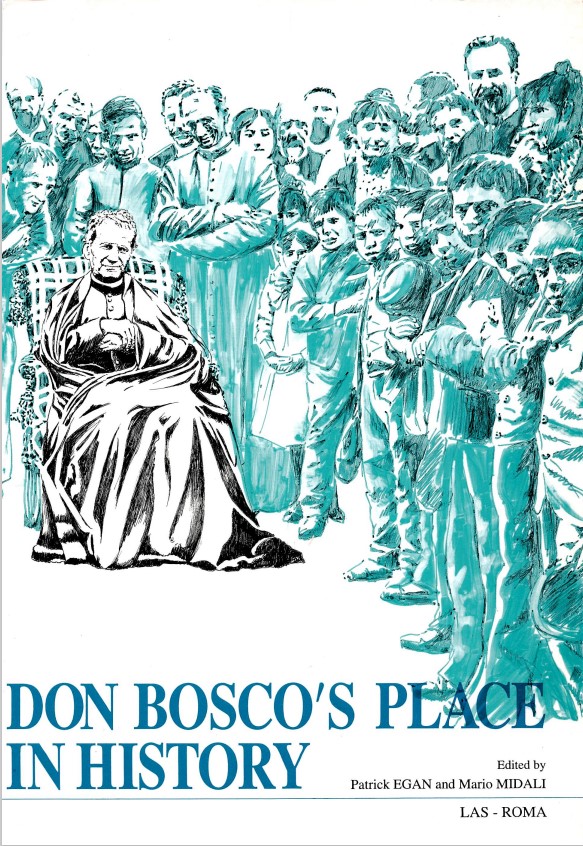
Pietro Braido – “Prospects for future research on Don Bosco” in “Don Bosco’s place in history”
Pietro Braido in his essay (final contribution of the Congress) retraces the central points treated by the various scholars and lists some themes to be explored for future research such as, for example, reflections related to theology or historical events made by the Saint at the “beginnings” of his life, Don Bosco writer and editor for the masses, major publication of critical texts of the sources.
Fausto Jimenez – Don Bosco and the cultivation of ecclesiastical and religious vocations in «Don Bosco’s place in history»
The present essay emphasizes Don Bosco’s dedication to promoting vocations, both among men and women. The Saint also dealt with “late” vocations, not only those among young people. For him it was of fundamental importance to find a sufficient number of priests/nuns to meet the needs of the observants.
Giuseppe Bracco – Don Bosco and civil society in «Don Bosco’s place in history»
The author of this paper outlines some aspects from the social and historical point of view of the city of Turin in the period in which Don Bosco lived and worked, to give a new key to understanding the Founder of the Salesian Family.
Continue reading “Giuseppe Bracco – Don Bosco and civil society in «Don Bosco’s place in history»”
Anita Deleidi – Don Bosco and Maria Domenica Mazzarello: their historical and spiritual relationship in «Don Bosco’s place in history»
In this paper the author describes how the spiritual bond between Don Bosco and Maria Mazzarello was born, up to the idea on the part of the Saint to create a Salesian women’s congregation. In fact, the Institute of the Daughters of Mary, Help of Christians, was founded by the two Saints in 1872.
Emile Poulat – Don Bosco and the Church in the world of the Ninetheenth century in «Don Bosco’s place in history»
Emile Poulat in his essay traces some reflections concerning the Church in the 19th century, the figure of Don Bosco and the presence of the Salesians in France. Continue reading “Emile Poulat – Don Bosco and the Church in the world of the Ninetheenth century in «Don Bosco’s place in history»”
Raffaele Farina – The state of the Central Salesian Archives and their use in «Don Bosco’s place in history»
This paper reconstructs the fundamental stages that have marked the history of the Central Salesian Archives: from its transfer to Rome in 1972 to the digitalization of documents. Continue reading “Raffaele Farina – The state of the Central Salesian Archives and their use in «Don Bosco’s place in history»”
Sabino Frigato – Don Pietro Ricaldone. Quarto successore di Don Bosco 1932-1951
Testo commemorativo a cinquant’anni dalla morte di Don Pietro Ricaldone, quarto successore di Don Bosco e fautore della nascita dell’Università Pontificia Salesiana, luogo di formazione a livello teologico, spirituale e pedagogico.
Continue reading “Sabino Frigato – Don Pietro Ricaldone. Quarto successore di Don Bosco 1932-1951”